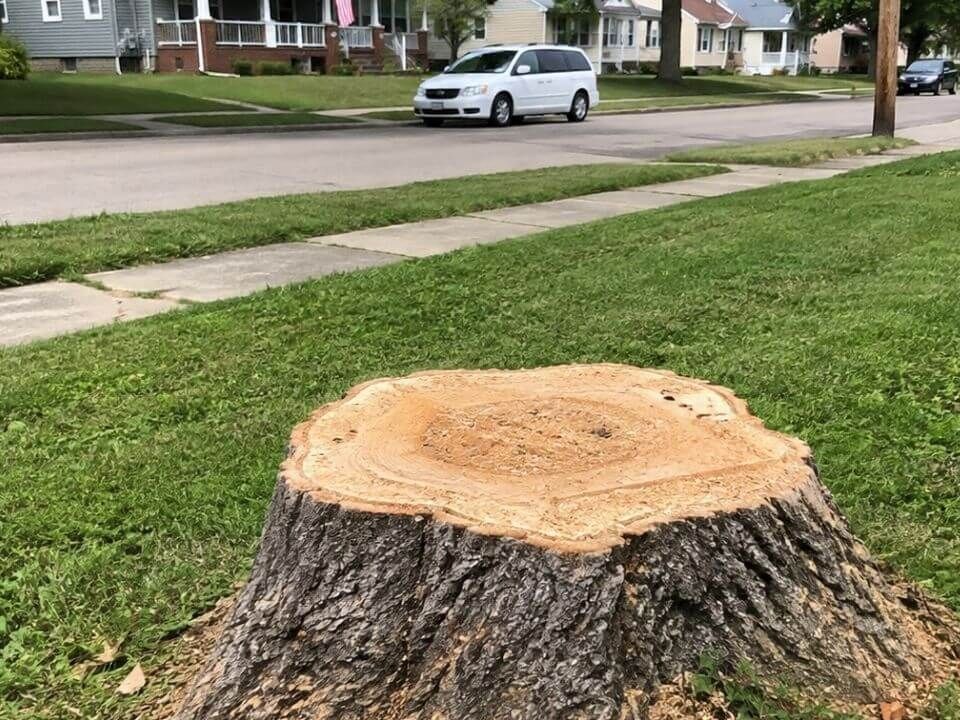
Stump Grinding in Jeffersonville, IN
Stump grinding in Jeffersonville, Indiana, gives homeowners and property owners a practical way to reclaim the ground left behind after a tree comes down. Jeffersonville Tree Service handles unwanted stumps that interfere with mowing, landscaping, fencing, walkways, future planting, and everyday use and enjoyment of the yard.
We provide stump grinding and stump removal solutions throughout Jeffersonville, from tighter properties near downtown and the riverfront to homes closer to the I-265. The goal is not just to make the stump less visible. It's also to choose the right method for what you plan to do with the space next.

Contact Us
What is stump grinding?
Once an interior is removed, the stump and major roots remain underground. That can be perfectly acceptable in an unused corner of a large property. In the middle of a maintained Jeffersonville lawn, however, a stump can become an obstacle every time you mow, install landscaping, run a fence line, or try to use that section of the yard.
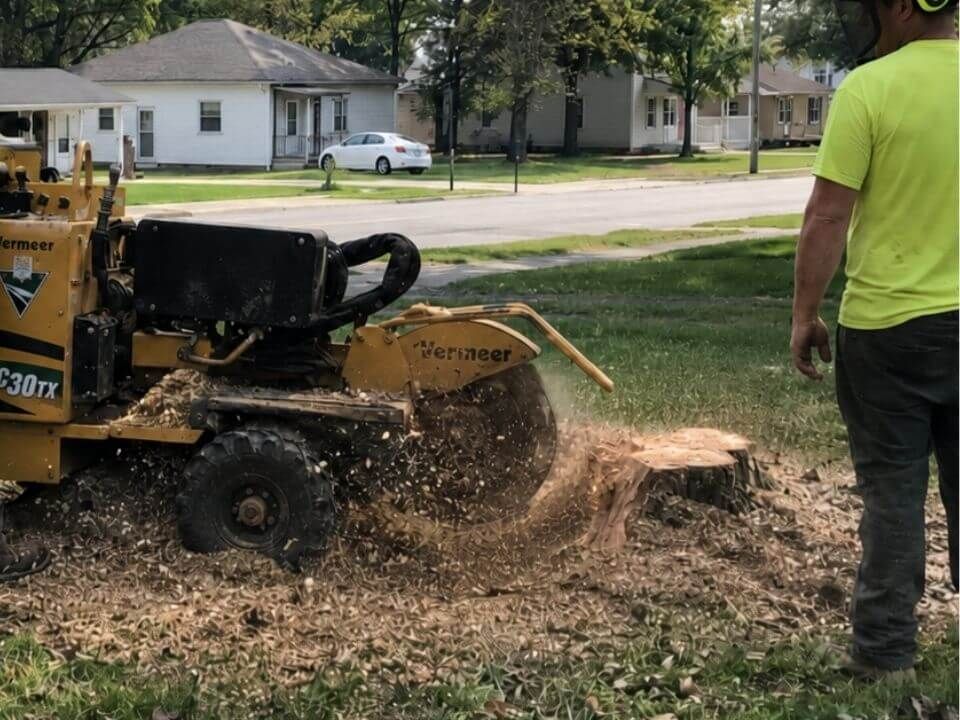
Stump grinding solves the above-ground problem by using a rotating cutting wheel to reduce the stump and accessible root flare into small wood chips. The finished depth depends on the intended use of a site. A stump that only needs to disappear beneath lawn grade may require a different approach from one sitting where a planting bed, patio, or future construction project is planned.
The important question is not just, "Can you grind this stump?" It is, "What needs to happen here after the stump is gone?"
What's the difference between stump grinding and stump removal?
We find that most of the time, when people are searching for stump removal in Jefferson, Indiana, they really mean stump grinding, but technically the two methods are different.
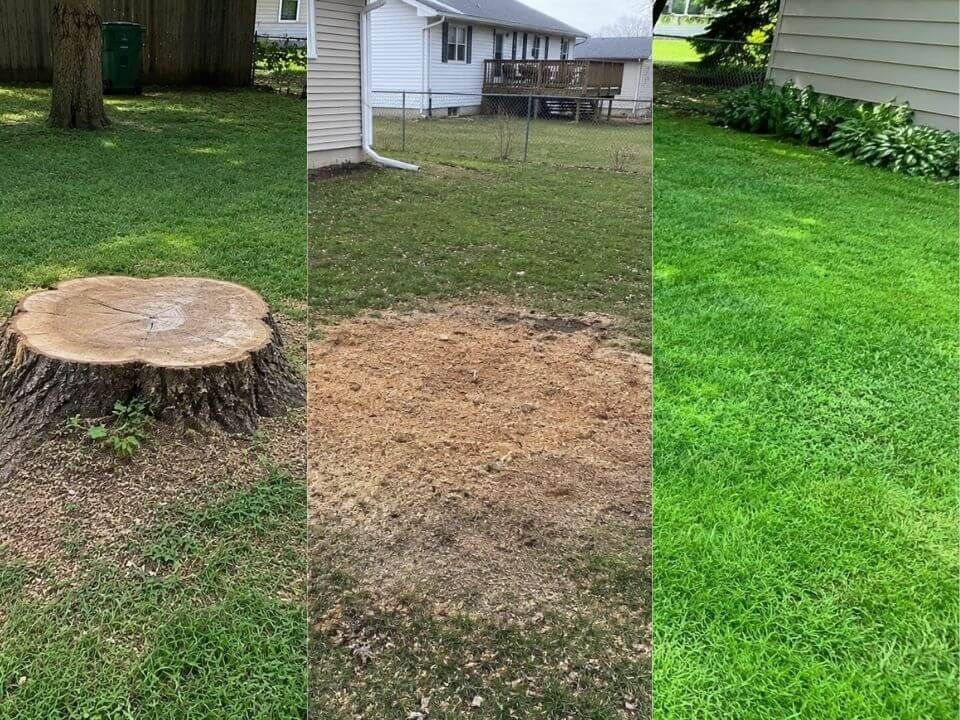
Stump grinding mechanically cuts the stump below the surrounding surface area while leaving much of the deeper root system in the ground. Those remaining roots are generally left to break down naturally over time. Because the entire root mass does not need to be excavated, grinding disturbs a much smaller part of the yard.
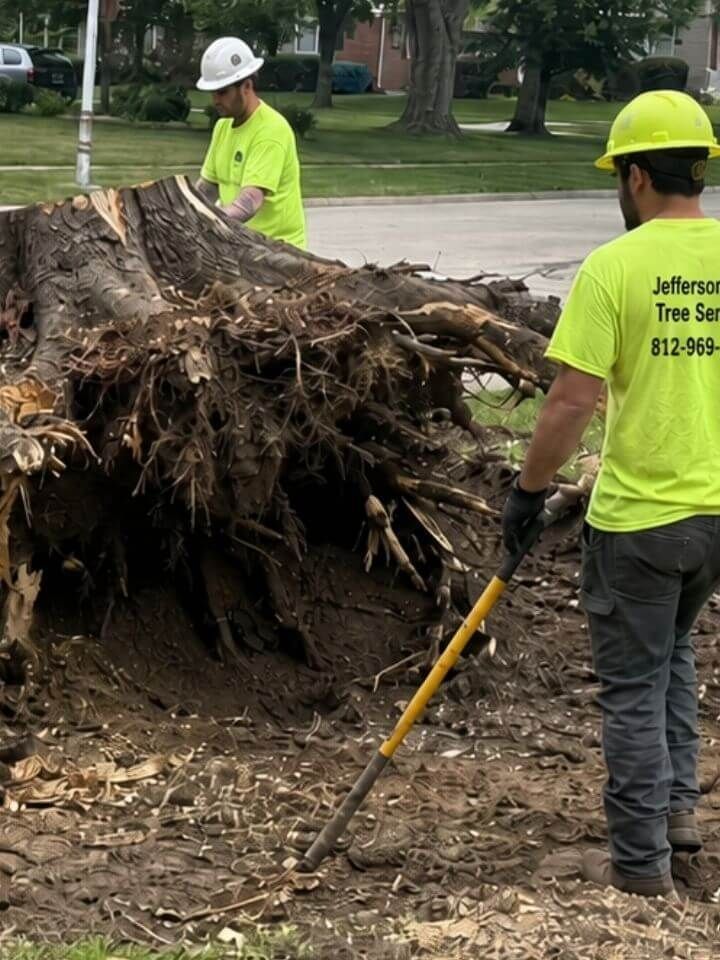
On the other hand, full stump removal is more aggressive. It involves digging out the stump and a substantial portion of the root ball, often using excavation equipment. That produces a larger hole and moves considerably more soil, but it may be justified when the root mass conflicts with what is being built next if there is construction planned.
Stump Grinding
- Reduces the stump below grade
- Leaves deeper roots in place
- Less disruption to the yard
- Well suited for lawns and landscaping
- Usually requires less excavation
Full Stump Removal
- Excavates the stump/root ball.
- Removes substantially more root material.
- Creates a larger disturbed area, better suited for some construction needs.
- May require an excavator or similar equipment.
This is when stump grinding is usually the better fit
Stump grinding makes sense when the main goal is to make the area usable again without excavating a large section of the property. That includes stumps sitting in lawns, around landscape beds, beside driveways, near fences, or in areas you simply want to maintain without steering a mower around an old trunk.
It's also useful when preserving the surrounding yard matters. Digging out a mature root ball can disturb more soil than homeowners expect because roots spread well beyond the visible stump. In fact, mature tree roots may spread two to five times the width of the canopy. Grinding concentrates the work around the stump and accessible surface roots instead.
For most residential properties, that is enough. If you just want grass where the stump used to be, reduce a trip obstacle, or the remains of a removed tree out of sight, full excavation may be overkill, with stump grinding being the ideal.
This is when full stump removal may make more sense
There are situations where leaving the root mass underground isn't ideal. Full stump removal deserves consideration when a future foundation, footing, retaining wall, driveway extension, utility trench, or other construction feature needs to go on that same ground.
The difference is what happens below the surface, because both stump grinding and stump removal leave the stump not visible. Stump grinding removes the portion of the tree that interferes with ordinary surface use, but its roots remain underground. If a construction project requires excavation throughout that exact location, those roots and the remaining root ball can still be encountered later.
Full removal can therefore make sense when the goal is not "give me my yard back," but rather "I need this exact piece of ground cleared for excavation." It does create more of a disruption upfront but can eliminate a subsurface conflict before another project begins, preventing delays.
What actually happens during stump grinding?
A Jeffersonville stump grinding project starts by looking at more than the diameter of the cut trunk. The work area needs to be checked for: surface roots, pavement, landscaping, fencing, slopes, access restrictions, and underground utilities.
The grinder is then positioned so its cutting wheel can work progressively across the stump. Instead of attempting to pull the entire stump upward, the wheel removes the wood a little at a time. Large root flares may require the grinding area to extend beyond the original trunk diameter.
Here's Our Process:
- Inspect the stump and access. Gate widths, patios, fences, slopes, and landscaping to determine what size equipment can physically reach the stump.
- Identify underground conflicts. Locating utilities is crucial because the cutting wheel works below ground level.
- Grind this stump and accessible flare roots. The wood is reduced progressively rather than pulled from the soil as one piece.
- Address the resulting chips and grindings. They may be removed, used elsewhere as woody material, or handled according to the homeowner's plans for the site.
- Prepare the area for its next use. Lawn restoration may require additional soil because a cavity filled primarily with wood grindings can settle as that material decomposes.
What affects the cost of stump grinding in Jeffersonville?
Stump grinding prices are driven by the amount of work involved rather than one universal per stump. Number diameter is important, but a stump that flares widely at ground level may require substantially more grinding than the visible trunk measurement suggests.
Access can also change the job. A stump in an open front lawn is easier to reach than one behind a narrow gate, next to a retaining wall, or surrounded by valuable landscaping, surface roots, slopes, hardscape, utility conflicts, the desired grinding depth, the number of stumps, and whether grindings are removed. All can affect the final scope.
Common stump grinding cost factors include:
- Stump diameter and root flare
- Number of stumps
- Equipment access
- Stump location
- Surface roots
- Nearby utilities
- Concrete, patios, fences, or retaining walls
- Desired grinding depth
- Chip removal
- Site cleanup
- Whether the area needs preparation for lawn landscaping or construction
Let us take care of your tree stumps
An old stump doesn't have to be a permanent feature of your yard if you don't want it to be. Jeffersonville Tree Service provides stump grinding and stump removal options for homeowners throughout Jeffersonville, Indiana. Whether the goal is easier mowing, a cleaner landscape space for a fence, or preparation for another project, the right solution starts with knowing how much of the stump actually needs to come out. We can help determine whether grinding is enough or whether the plans for the property make more complete stump removal worth considering. Give us a call today!